Coverage
Candid vs Traditional Wedding Photography: What Is the Difference, and Do You Need Both?
Most Telugu weddings need a record of every ritual and relative, and pictures that feel alive. Here is how the two approaches differ and fit together.
“Do you do candid or traditional?” is often the first question families ask a wedding photographer — and it’s a good one, because the two approaches produce very different photographs. But for most Telugu weddings the real answer isn’t one or the other. It’s understanding what each does well, and how they fit together on the same day.
What traditional wedding photography is
Traditional photography is the complete, orderly record of a wedding. The photographer covers every ritual from a clear, predictable viewpoint and makes posed photographs of the couple with relatives and guests — above all, the stage photographs where family groups come up one after another.
Its strengths are completeness and clarity. Every ritual is there, in sequence. Every relative is there, facing the camera, well lit and recognisable. Years later, this is how a family answers “Who came to the wedding?” and “How was the Mangalya Dharanam done?”. For many elders, the stage photograph with the couple is the one picture they will ask for.
Traditional photography usually goes hand in hand with traditional video — the full-length, in-sequence recording of the events. You can read more on our traditional photography page.
What candid wedding photography is
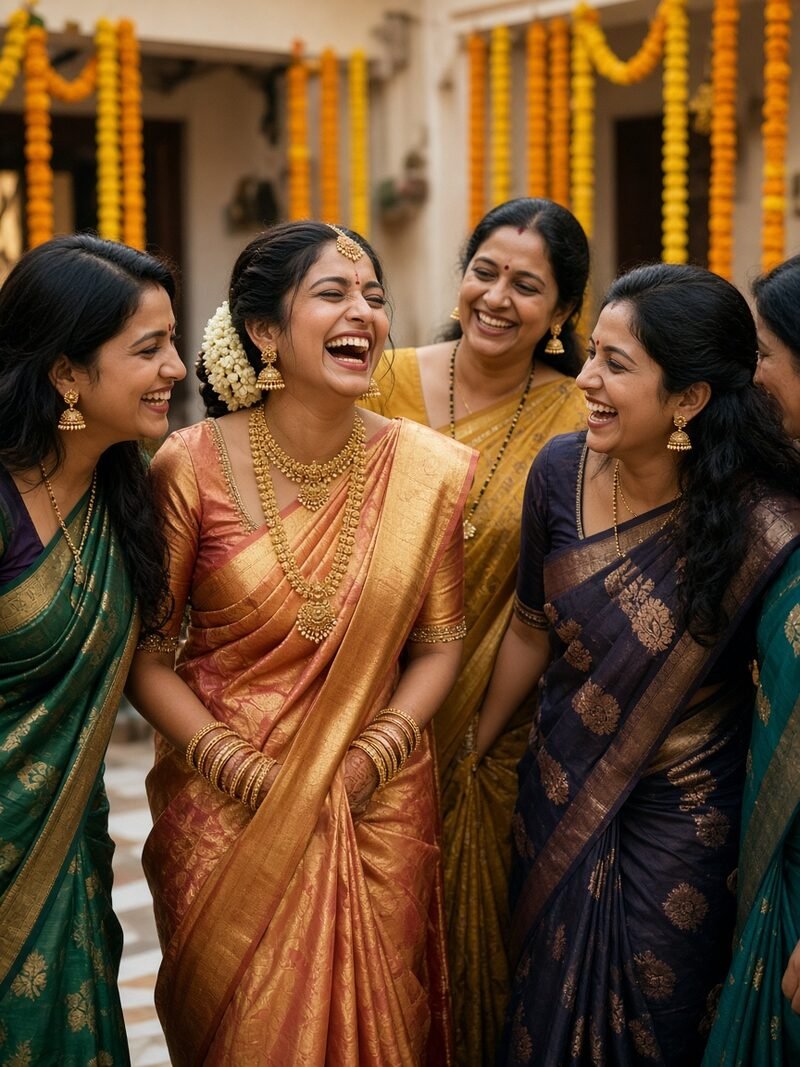
Candid photography records people as they are, without asking them to pose. The candid photographer moves quietly, anticipates moments and photographs reactions: the bride’s mother wiping her eyes during Kanyadaanam, the groom’s friends laughing during Kashi Yatra, the flash of competition in Talambralu.
Its strengths are emotion and atmosphere. Candid photographs rarely show everyone clearly, and they don’t follow a checklist — but they carry how the day felt. They are often the photographs couples frame and share. Our candid photography page explains our approach.
Side by side
| Traditional | Candid | |
|---|---|---|
| Main goal | A complete record: every ritual, every relative | Emotion, atmosphere and story |
| How people appear | Posed, facing the camera, clearly lit | Natural, often unaware of the camera |
| Photographer’s position | Consistent, clear view of the ritual and stage | Moving, looking for reactions and angles |
| Family groups | Organised and complete | Informal, as they happen |
| What elders value | Very high — these are the “proof” photographs | Appreciated, but not a substitute |
| What couples share | Some | Many |
| Editing style | Clean and consistent | More interpretive, but should still look natural |
How the two work during the key rituals
The difference is clearest at the moments that matter most. Here’s how a traditional and a candid photographer typically divide a Telugu muhurtham between them:
Jeelakarra Bellam
The traditional photographer takes the clear, frontal view of the couple as the cloth screen is lowered and the cumin-jaggery paste is placed. The candid photographer looks at faces — the couple’s first glance, the parents behind them, the aunt whispering to her neighbour.
Mangalya Dharanam
Traditional coverage makes sure the knots, the mangalsutra and both faces are visible, with the priest and elders in frame. Candid coverage catches the bride’s expression and the family’s reaction around the couple.
Talambralu
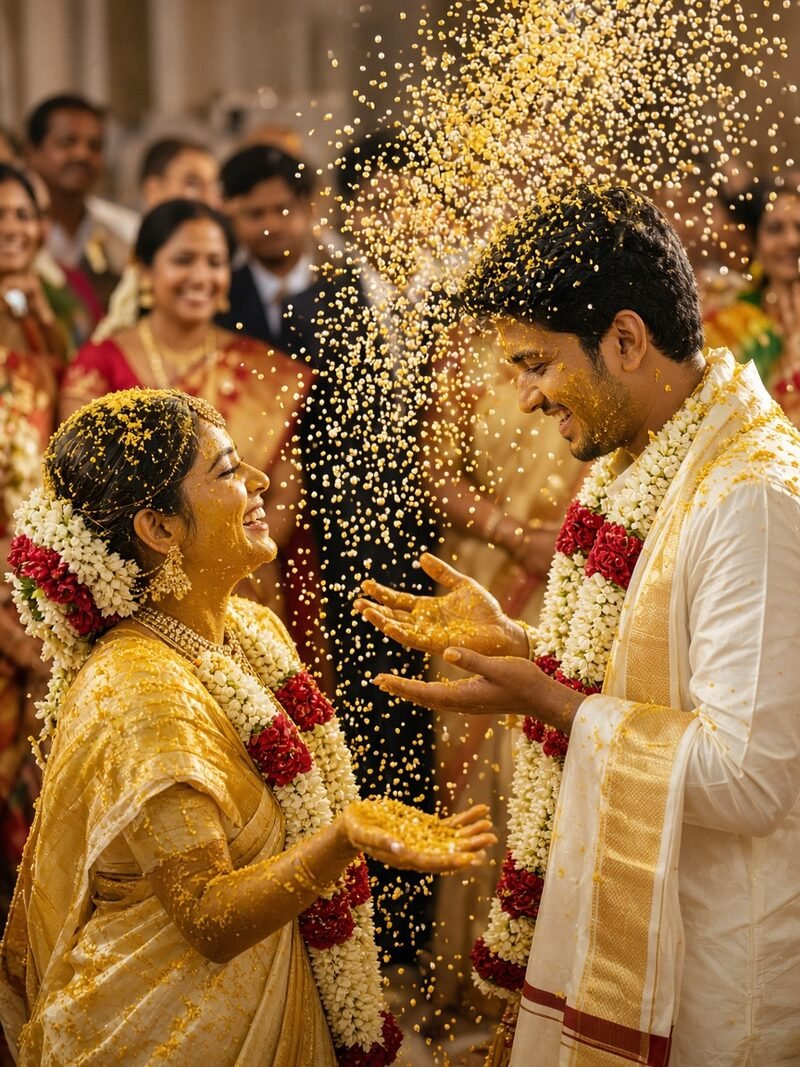
Traditional: a clear sequence of the couple showering each other. Candid: the grains frozen in mid-air, the laughter, the cousins cheering one side on.
Stage photographs
This is traditional photography’s territory. The candid photographer usually uses this time for guests, children and moments around the hall.
When both photographers plan their positions together before the wedding, they complement each other. When they don’t, they end up in each other’s frames — or both miss the moment from the same bad angle. That’s one strong reason to book both from the same studio, or at least to make sure the two teams talk beforehand.
Which should you choose?
Some honest guidance, based on how families typically feel after their weddings:
- Choose both if you have a traditional wedding with a large family — which is most Telugu weddings. You’ll want the complete record for your elders and the emotional photographs for yourselves.
- Lean traditional if your priority is every ritual and every relative, and a big stage-photograph session is planned. Add a candid photographer just for the muhurtham if budget is tight.
- Lean candid for small, intimate weddings, registered weddings with a close family lunch, or pre-wedding shoots, where there are fewer formal groups to cover.
Whatever you choose, a wedding film adds something neither kind of photograph can: the sound of the mantras, the nadaswaram and your family’s voices.
Four common misunderstandings
“Candid means only photos of the couple.”
Good candid coverage is about everyone who matters to you — parents, grandparents, siblings, friends, even the children running around the mandap.
“Traditional photography is old-fashioned.”
The style can be timeless rather than dated. Clean light, sharp faces and natural colour make traditional photographs look good for decades.
“Candid photography needs no planning.”
The opposite. A candid photographer who knows the ritual sequence and your family can anticipate moments. One who doesn’t is always a second too late.
“We’ll get candid shots from the traditional photographer anyway.”
Occasionally, yes — but a traditional photographer’s job is to stay in position for the complete record. Expecting both from one person usually means compromising on one.
Questions to ask before booking
- Can we see a complete wedding gallery — traditional and candid — from a similar wedding?
- How do your traditional and candid photographers coordinate during the muhurtham?
- How are family group photographs organised, and who manages the list?
- How many edited photographs of each type should we expect, and in what format?
- Is traditional video included, or a cinematic film, or both?
If you’d like to talk through the right mix for your own wedding, we’re happy to help — even if you’re still comparing studios.